
Interview with Lazzaro Simoncini, owner of INFISTIL
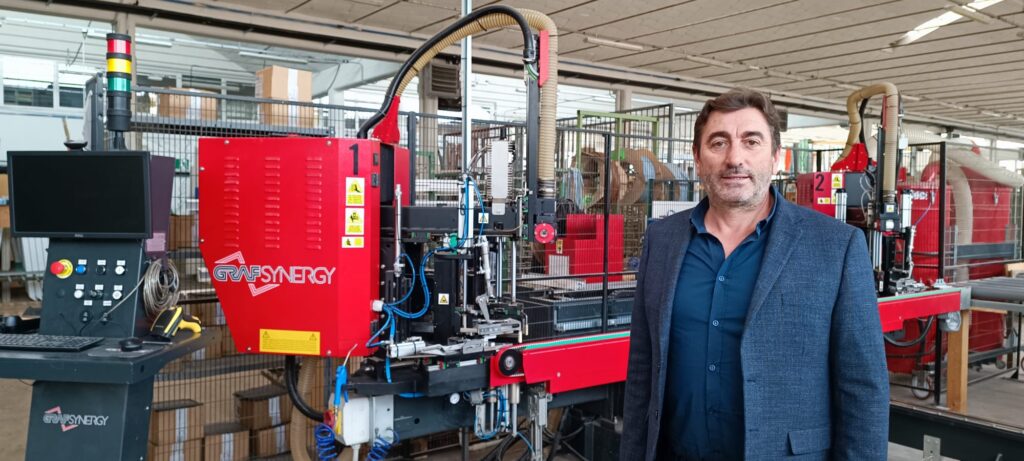
INFISTIL has had the privilege and honour of being the first company in the world to choose the V-Perfect technology since its debut in 2013: we were the ones to purchase the GRAF Synergy SL4 FF welding machine number 1 [see dedicated article link].
In fact, the collaboration with GRAF Synergy began even earlier, in 2011, with the purchase of a profile cutting centre. Later, when we acquired the FF welding machine, we replaced the cutting centre with a more modern cutting and processing centre that could adequately supply the FF, along with a reinforcement bolting and drilling centre, a multi-spindle frame drilling centre, and a hardware assembly centre. Finally, we replaced the FF with the EVO.
We chose GRAF over other competitors because we wanted a company that was pioneering in the industry, focused on innovation and the industrialisation of the production processes we needed at that time.
With the innovative FF, we had finally found the opportunity to elevate PVC to a higher quality product, a goal our company had set for itself some time ago as we sought to shift production from large-scale construction to a market with more refined aesthetic qualities. Furthermore, with the internal GRAF team, we had established a special collaborative relationship, allowing us to feel like part of the project for the launch of the FF.
The aesthetic appeal of our PVC windows has reached unimaginable levels since the introduction of the V-Perfect patent. With the automation of work processes, the speed of execution, and the synergy between machines and programming software, we have achieved a significant increase in productivity, while simultaneously avoiding production errors caused by misinterpretation of work sheets. With barcode readers at various stations, and thanks to the ability to receive production information, we can prevent mistakes and accelerate work cycles. The benefits are such that at times, demand does not fully saturate our increased production capacity.
All of this has been made possible thanks to the strong relationship that has developed between our team and the GRAF technicians. We worked in complete synergy, receiving careful support throughout all phases of the project and during the periods following the commissioning of the production line.
The compatibility of GRAF machines with other equipment in our company has not been an issue; in fact, thanks to minor adjustments to coordinate production, all work cycles have benefited in terms of quality and speed. Compared to the production system prior to the purchase of the new line, the quality leap has been radical. Previously, we had a fairly high-performing setup: a cutting centre, a reinforcement and assembly screw centre, a two-head welder and a single-head welder, a semi-automatic assembly bench for door hardware, and two glazing benches with a jib crane. All these machines, from different brands and introduced in subsequent years, had their own timings and characteristics, often not in sync with each other. With the introduction of the cutting centre, the screw and drilling centre, the FF welder, and the frame drilling and assembly centre, we also had to revise the glazing and assembly processes. The working times for the various stages were set based on the welder’s capabilities, thereby eliminating ‘dead’ times before and after the welding operation, optimising both in terms of time and logistics, and removing or reducing ‘buffer zones’ between the various stations that had different processing times. Additionally, with a simple check of the number of welded frames and the number of pieces cut and processed by the centre, we gained a much clearer understanding of the progress of production, as well as the times and costs involved.
Before the introduction of the integrated GRAF line, we could consider ourselves ‘great’ craftsmen, which meant it was essential to have a deep understanding of the product in order to carry out various processes in a semi-automatic manner. For this reason, we exclusively needed personnel who were already trained and experienced. With GRAF’s automation, years of experience and training are no longer strictly necessary, as it is now possible to achieve excellent results in much shorter times, thereby enabling even new staff to work independently. In an increasingly dynamic and fast-paced job market, with more frequent staff turnover, these aspects are crucial: automation and ease of use are the foundation of production continuity.
In conclusion to this account of our adventure as pioneers, I could describe the relationship with GRAF as almost ‘familial’, especially after the purchase and sharing of the seamless experience of the FF. From that moment on, we had the opportunity to collaborate in a truly ‘synergistic’ way, as the name GRAF Synergy suggests, allowing us to experience firsthand just how revolutionary and safe the V-Perfect innovation could be. GRAF opened their doors to us, and we both demonstrated our seriousness and reliability, working closely together to establish a unique relationship of mutual trust that goes well beyond the typical supplier-client dynamic.
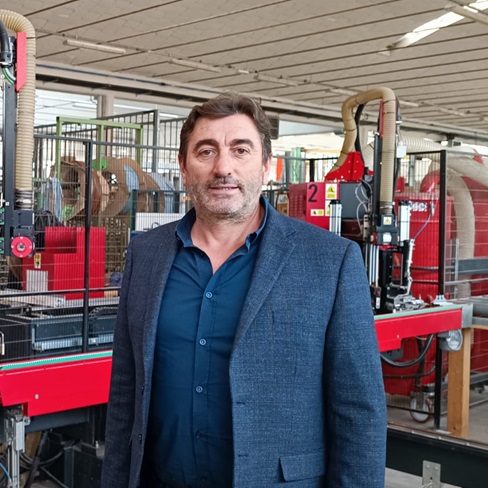
In the photo, Lazzaro Simoncini