
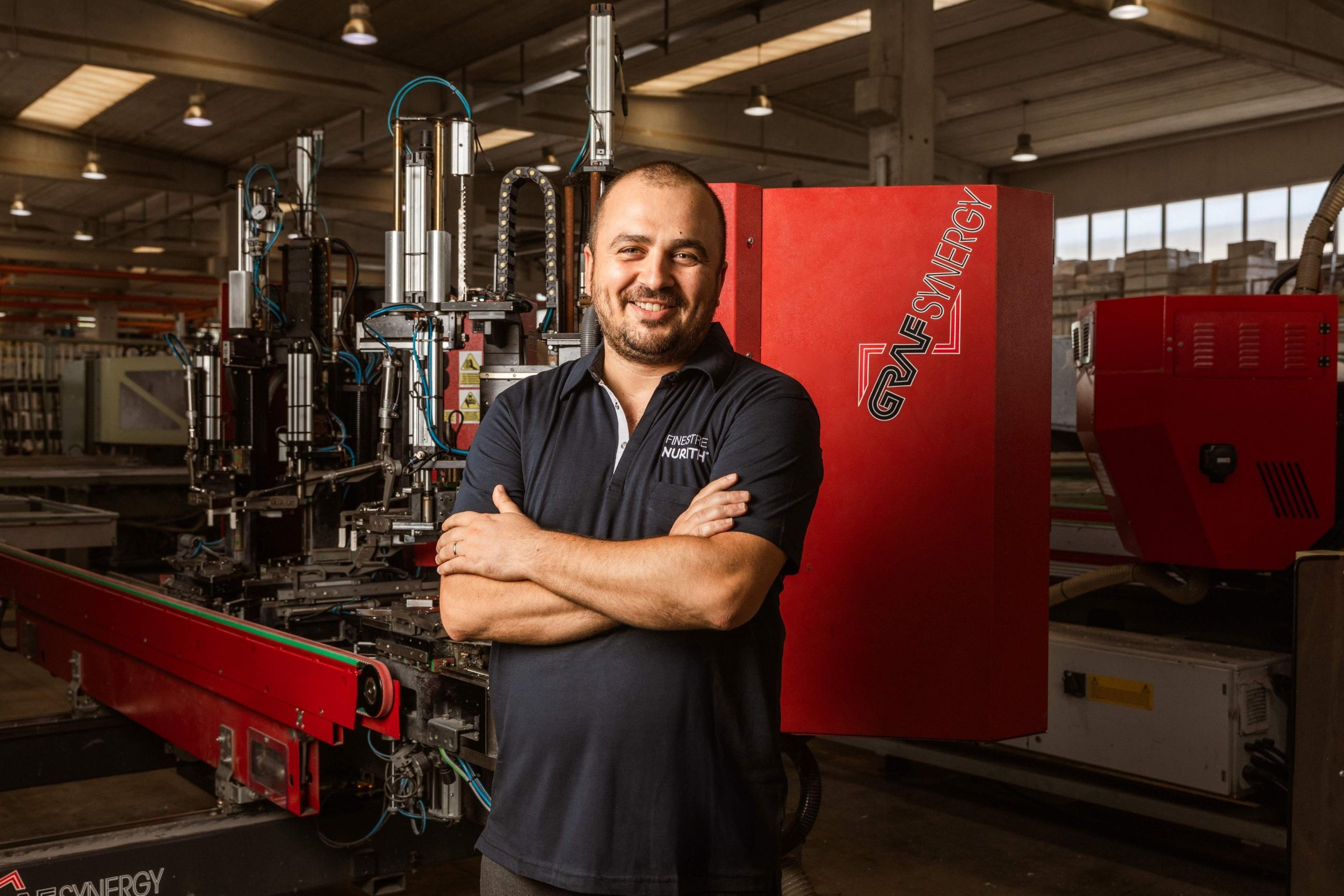
Interview with Giuseppe Bitetti, Head of the Technical Office at FINESTRENURITH
The collaboration between FINESTRENURITH and GRAF Synergy began back in 2017, with the purchase of the first ‘four-head’ EVO welding machine for the Ginosa (TA) plant.
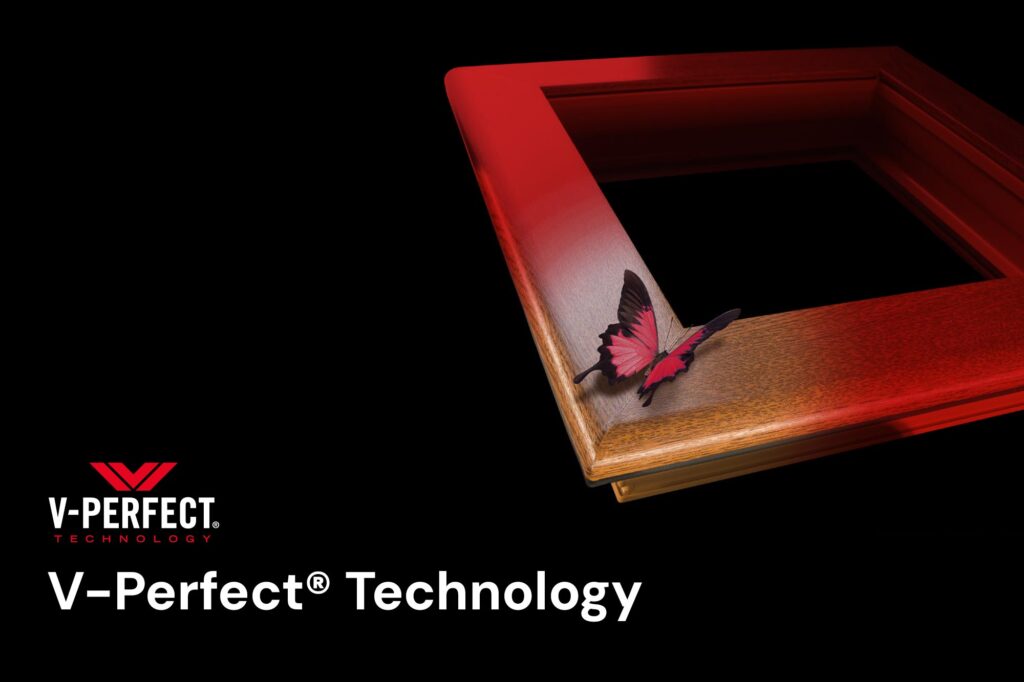
The need that prompted us to contact GRAF was to enhance the aesthetic finish of our products, particularly the welds, which have always been a weak point of PVC windows. Before the advent of GRAF Synergy’s V-Perfect technology, these windows could easily be distinguished from wooden ones due to the unsightly welds and cleaning marks.
The first welder proved to be highly effective, leading to the addition of three more for the Ginosa plant: a second SL4 FF EVO, an SL4 FF DIA, and an SL2 FF DIA. All were integrated into existing lines from another manufacturer with relative ease.
At the Gonzaga (MN) facility, GRAF has provided us with a complete new line, from the machining centres to the glazing benches. From the early stages of the design process, GRAF actively collaborated with the design team at FINESTRENURITH to create a targeted and optimised layout based on our specific requirements. The layout was developed using the ‘Fast Forward Plant’ system, which fully leverages GRAF’s expertise in designing production lines for PVC windows.
Innovation, Made in Italy, geographical proximity, support, and the ability to listen to the customer in order to provide real solutions: these have been the strengths that led us to choose GRAF as our partner over other competitors.
The first and most obvious improvement achieved through GRAF’s technology is also the one that is immediately noticeable to the end customer: the perfect aesthetic finish of FINESTRENURITH fixtures. Thanks to the introduction of V-Perfect technology, the quality of the corner finish has significantly improved. On a corporate level, we have certainly enhanced the quality of our operators’ work through automation, which has in turn refined the control and optimisation of our production processes.
Although a direct comparison is not possible, thanks to these interventions we have observed a level of productivity and efficiency in our plants that fully aligns with our, I must say, high expectations. By automating the production process, the cut profiles, doors, and frames are all managed through automated transport and logistics. This has allowed us to eliminate trolleys from the facility, both for profiles and for doors and frames, thereby eliminating downtime associated with searching for and managing parts. Furthermore, we have not recorded any substantial compatibility issues between the machines and the other equipment or tools we use.
At a collaborative and supportive level, our relationship with GRAF during the design, procurement, and execution of our project has been excellent at all stages and across all levels.
The training of personnel and the use of machines in standard configuration have not posed any issues. With the machines developed specifically for the Gonzaga plant, which are customised and tailored to our needs, there were naturally longer gestation periods before reaching full utilisation and efficiency.
In summary, GRAF’s willingness to quickly find shared and concrete solutions to our problems has been crucial in achieving our quality and productivity goals. This success required some additional investments in technology, machinery, and process optimisation, but these have had a decisive positive impact on the quality of our final product and the overall productivity of our factories.